Saturday, July 2, 2011

Biochar: A Green Way Out Of Here

This blog has asserted over and over that there are many ways out of the climate changing cycle we are currently in.

That is what makes not feverishly working toward climate safety criminal.

We have discussed some of the ways out of our predicament, including methanol, dandelion, and solar, to name a few.

There are many others.

In this post today we mention another one for your perusal.

Yes, it is TIME for a biochar solution.

More information is available at BIOCHAR Solution.

Monday, June 20, 2011

Are We Really Sure How Stars Decline? - 2

In the first post of this series this blog asked Are We Really Sure How Stars Decline?

In that post it was pointed out how important it is, in terms of The Tenets of Ecocosmology, to know solar science, and know it well.

The obvious reason for that is because our future as a planetary society in the long run is utterly dependent on the way the Sun behaves.

The dogma of science is quite assertive and impatience with questions about its authority, even though scientists are constantly being surprised by new discoveries, such as huge waves on the Sun.

The recent decade saw scientific expressions of certainty as to how the Sun would enter an active period soon, after having been relatively quite for a period of time.

Now, all of a sudden, a flip flop is taking place and scientists are now saying it looks like the Sun will be going quiet for a prolonged period instead.

The question that arises, in the context of the climate of this planet, is how will that impact global warming:

How much light the sun emits affects the Earth's weather and climate. And sunspots — dark dots on the face of the great fusion reactor in the sky — do alter the orb's output. So when solar scientists said last week that sunspot cycles might be going into hibernation, the impact on our planet's climate became a hot topic.

Previous prolonged weakenings in the solar cycle may have launched mini-Ice Ages. An example is the so-called Maunder Minimum in the 1600s and 1700s when the Thames River routinely froze, something that never happens today.

So if we're to face a temporarily cooler sun, maybe all those greenhouse gases we've been putting into the atmosphere will keep us toasty?

A cooler sun might mean a drop in global average temperatures of at most 0.3 degrees Celsius. But the carbon dioxide already in the atmosphere today will add 0.6 degrees Celsius to global average temperatures by the end of the century. And more, since greenhouse gas emissions show no signs of diminishing. So the slightly cooler sun won't counteract a much hotter earth.

(Scientific American, David Biello). The political animals who also espouse dogma, and who have in general been in denial about global climate change, are likely to seize upon this new scientific "position" to defend the status quo.

As time goes on, this blog will research the issue and present the results to Ecocosmology Blog readers for their perusal.

But one thing is for sure concerning the Earth environment being impacted by the Sun in this decade, it is absolutely minuscule compared to the damage that human civilization is doing.

Friday, May 13, 2011

The Fukushima Coverup

Things are continually getting worse at the ill fated Fukushima nuclear power plant in Japan.

It is quite likely that the Fukushima disaster will surpass the Chernobyl disaster before long, if it hasn't already.

The government cannot be trusted to drop the propaganda and just tell the truth, nor to halt construction of new plants like Fukushima.

These nuclear power plants are not shielded from storm outbreaks or global climate change.

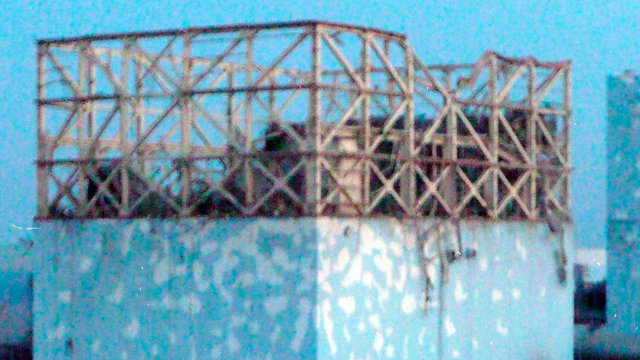
The video below indicates that Reactor 4 at Fukushima may tumble over since the ground underneath it seems to have been undermined with water, plus the Reactor 3 explosion damaged Reactor 4's structural integrity.

Washington's Blog has an interesting post about the coverup of the fact that one reactor melted down within a few hours of the earthquake and Tsunami.

Germany has decided (see also USA Today) to stop all existing nuclear plants by 2022.

Japan admits that three reactors had a complete meltdown within hours of the earthquake and tsunami.

It is now known that "the worst possibility in a nuclear accident", something that is "far worse than a core meltdown" has taken place:

The nuclear fuel in three of the reactors at the Fukushima Dai-Ichi nuclear plant has melted through the base of the pressure vessels and is pooling in the outer containment vessels, according to a report by the Japanese government.

(Telegraph). Hot particles from Fukushima have been detected in Seattle, and one expert estimates that people in the Seattle area ingest up to 10 "hot particles" a day.

The trust in nuclear power seems also to have melted down and it is not likely it will be trusted again going forward.

A good idea, filtering radiation out of standing water in the reactor buildings, got underway but had to be shut down in a few hours because the radiation was too intense for some of the filtering to continue.

The filters were expected to last for weeks, not hours.

Dredd Blog and other blogs envisioned a cover-up from the beginning. In other words, news in advance. Now the cover-up has unraveled completely.

Seattle is getting more from Fukushima than meets the eye or what the government will admit.

It is even getting worse as shown in this post.

Four commissioners of the NRC are sabotaging efforts to improve safety, according to a member of congress.


Concerns about U.S.A. Fukushima type plants are covered here.